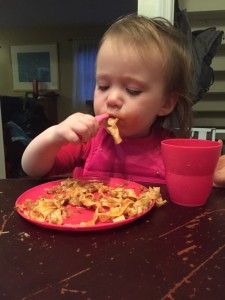
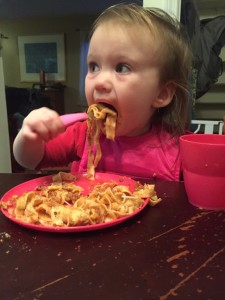
 Homemade pasta doesn’t usually rank high on a working mom’s to do list. But it’s worth it.
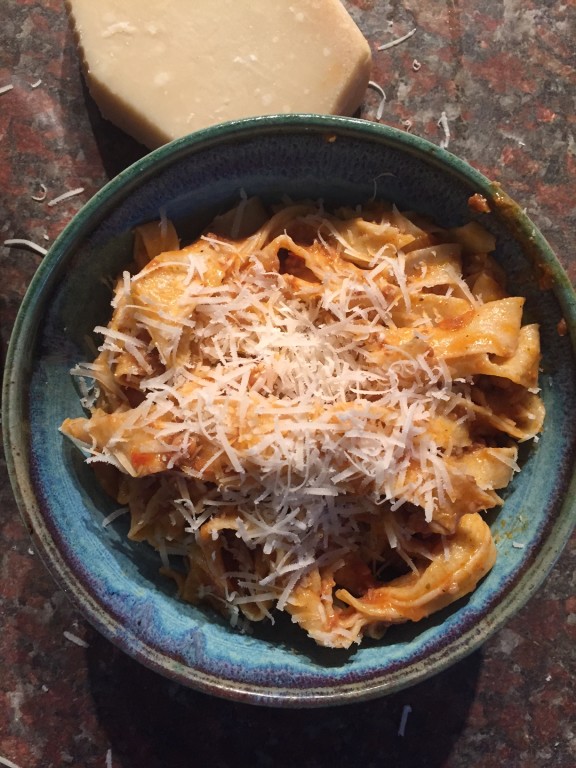
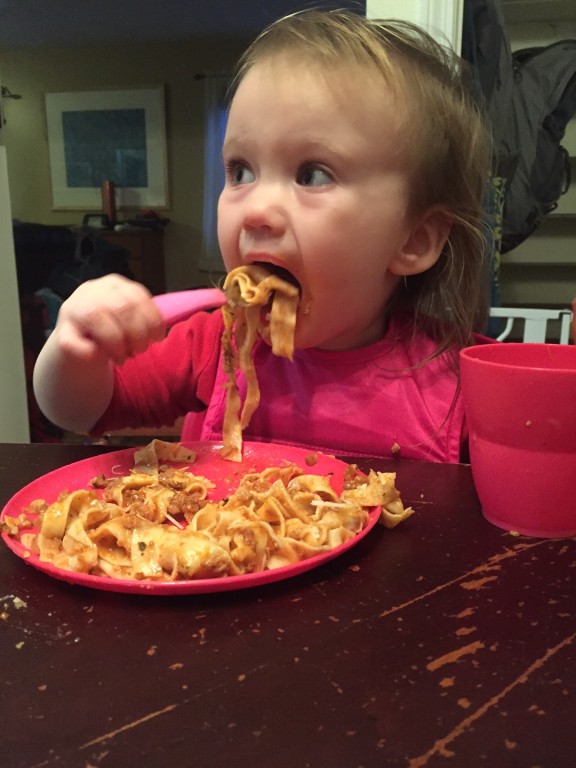
Well, on the weekend anyway. If you feel comfortable making a pie crust, this is similar but easier. If you don’t feel comfortable making a pie crust, just focus on the easier part. And it’s very forgiving to a mom’s other priorities (you know, the offspring).
I own a pasta machine, but lately I’ve been all about the hand roll. A pasta machine clips onto the side of your counter and has two rollers that gets your pasta thinner and thinner with each pass. Then finally, you run it through a cutting roller and end up with lovely fettuccini or linguine. This is very handy for those folks who don’t like rolling out things like pie crust. My (minor) annoyance with them is that 1) It’s one more piece of equipment to lug out (and own), 2) I get flour all over my floor and 3) I always end up with sheets of pasta that are way too long and annoying to work with. But the thing that has really bumped me over to the hand rolling (and I count myself among the masses who hate rolling things out in general), is that a hand rolled sheet of pasta has more imperfections.
And imperfections = more places for sauce to stick and less sauce at the bottom of your bowl or all over your plate. It really creates a quite lovely diner experience.
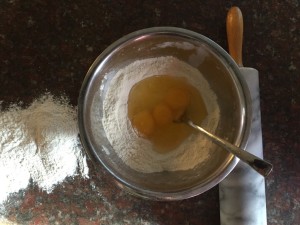 Eggs: Egg pasta is richer and lovelier than water pasta (what most store bought pasta is). You can make water pasta at home, but egg is actually easier and if you’re going to go to the trouble of making the pasta by hand, go full gusto and make it an egg pasta. And use farm fresh eggs, if you can. Because yum. I am constantly amazed at how big of a difference the right eggs make in a dish. I sell double the amount of maple lemon curd at the farmers market when I use eggs from one local farm vs another.
White Flour: While, generally speaking, good gluten development is important in making pasta (why I recommend using bread flour instead of all-purpose), I once accidentally used a corse cornmeal instead of semolina (semolina has lots of gluten and cornmeal has none), and the result was actually surprisingly tasty (although a little harder to work with). So if the type of white flour you use is holding you back from making pasta, just go with the all-purpose. It won’t make a huge difference.
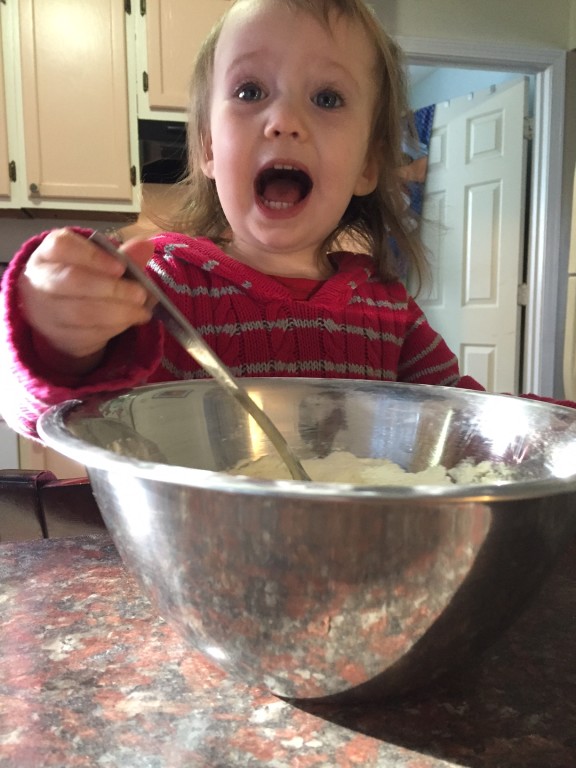 Semolina: Semolina is THE pasta flour. It’s what makes pasta pasta. Ok, technically semolina is a generic term that can refer to a lot of different kind of flours, but just about everyone uses different words for those other flours and leaves the term semolina for the stuff made from hard durum winter wheat. Winter wheats are higher in gluten, which helps give pasta it’s distinct chew and durum helps give pasta it’s distinct flavor (compared to breads, like rye bread or corn bread). I get my semolina flour in my local coop’s bulk department. In a larger grocery store you will likely find it in the baking aisle or international aisle.
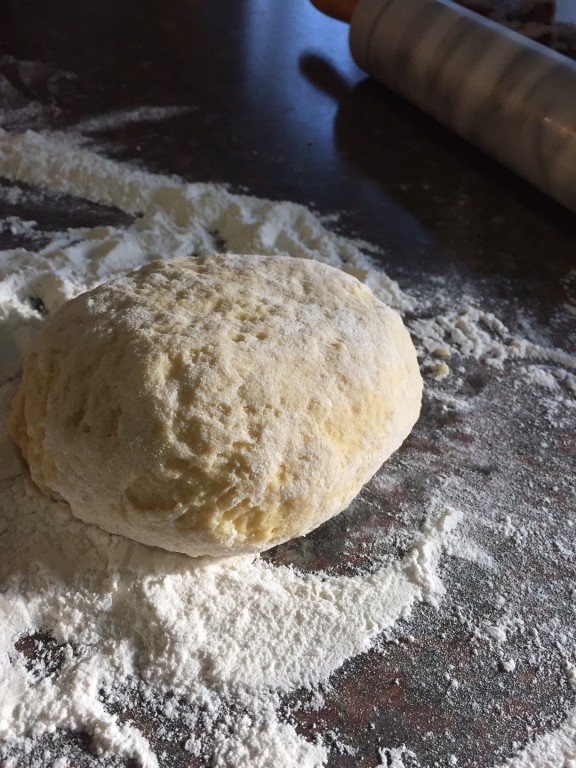 And yeah, that’s all that’s in egg pasta. Fork mix the dry ingredients together and make a well in the middle. Break the eggs into the well. Lightly beat them with the fork and then mix everything together with the fork until it becomes thick enough to use your hands. Dump a couple cups of flour onto your counter and knead the dough in the flour, incorporating more flour as needed to keep the dough from being sticky. Knead for a couple minutes, until it starts to smooth out. Then let it rest on the counter for about 20 minutes. Read your kids a book, go to the bathroom in peace, make pasta sauce, or whatever. If you don’t let the dough rest, it will be really hard to roll out. Resting helps relax the gluten structure. If you’re making the dough ahead, wrap it tightly in plastic wrap and refrigerate.
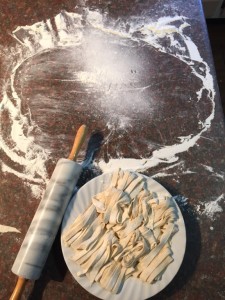
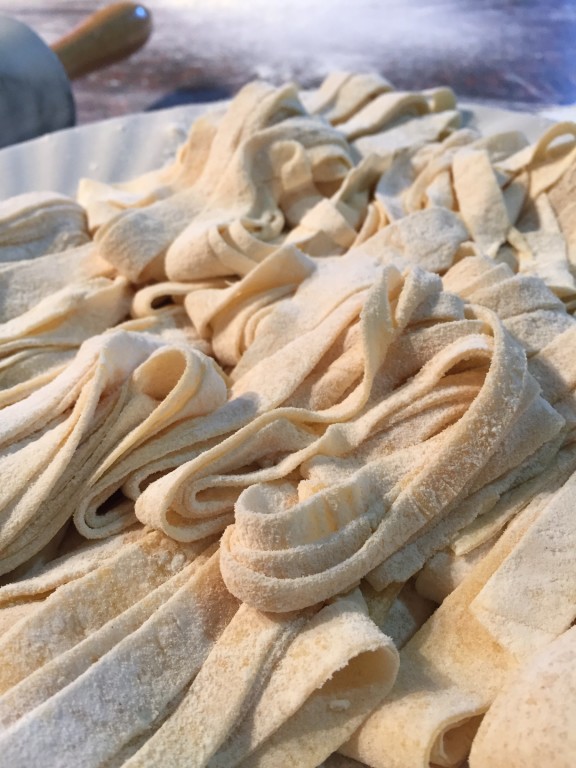
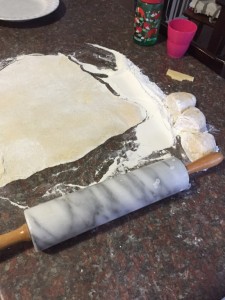 Cut the dough into 4 pieces and set three aside in some flour (flour is your friend in pasta making. Don’t worry about using too much, as you can always shake off any excess, but sticky pasta is annoying and clumpy). Generously flour your counter and roll your pasta dough into a rough rectangle about 1/8 of an inch thick. Constantly flour, flip and rotate your dough sheet to keep it from sticking and to spread the gluten web in both directions. When your sheet is sufficiently thin use a pizza wheel to cut the sheet into long strips of pasta. These don’t need to be perfect or even that uniform. I love the irregularities of homemade pasta. But definitely use a pizza wheel and not a knife for the cutting. It’s so much easier and a knife will often drag through the dough instead of cleanly cutting it. If you only have knives, choose your longest one and cut the dough with “set down, pick up” motions rather than the more tempting “slice and drag.” Repeat with the other 3 blobs of dough.
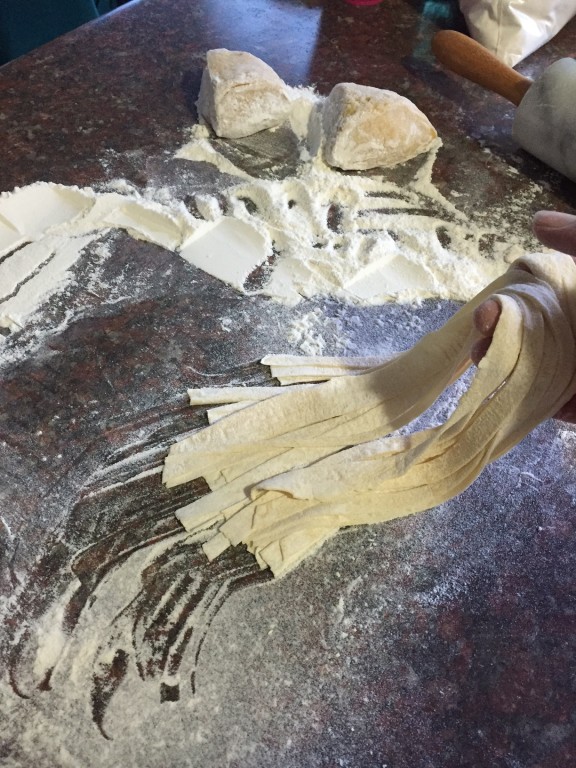
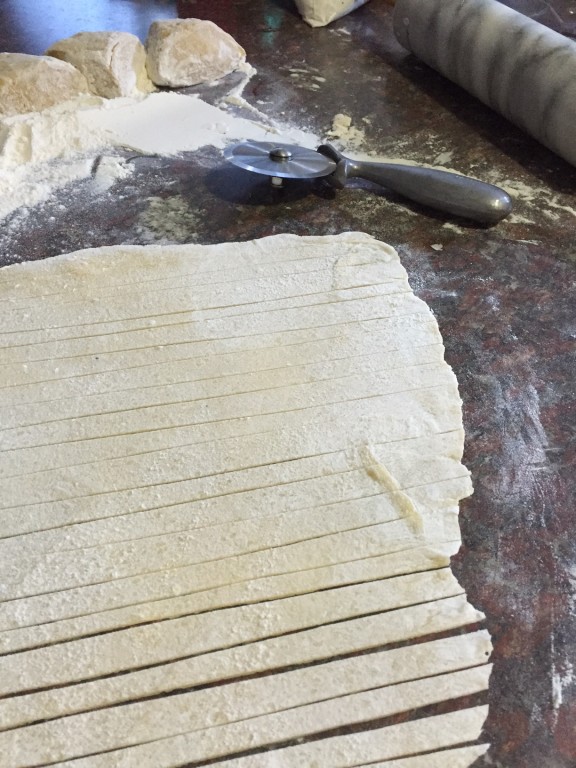 Put the cut pasta on a floured plate until you’re ready to use it. If you’re not using it in the next 30 minutes, cover it with paper towel and then tightly cover with plastic wrap. Ambient moisture will cause the pasta to stick together. You can refrigerate it for up to a week.
Shake off any excess flour before adding the pasta to water. Cook the pasta in a large pot of salted and oiled water (the increased flour on homemade pasta can quickly make a pot boil over and a couple tablespoons of oil in the water will prevent that). Fresh pasta cooks fast, so you can add a little more salt to the water than you usually do (it doesn’t absorb as much of the water) and keep an eye on the cooking time. Fresh pasta cooks in 1-3 minutes, rather than the 8-10 of dried pasta. When the pasta is al dente, drain as usual.
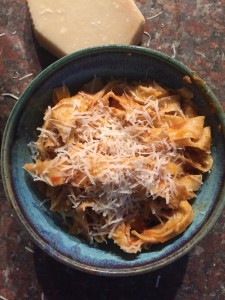
 We have been serving up our fresh pasta with “Mama Sauce.” Contrary to the name, this is my husband’s recipe. His grandmother came up with the recipe and passed it down to her kids. His mother made her own modifications and passed it down to her kids and now my husband has turned it into his own sauce. I would be writing about the French Canadian pork based delicious sauce that we regularly eat in our house, but there’s that whole “secret family recipe” thing going on, so you’ll just have to imagine how rich and delicious it is. The best piece of praise that I have ever gotten on my homemade pasta is when my husband said that using my fresh pasta has made our version of mama sauce better than his mother’s. He knows how to make a culinary wife proud.
Fresh Egg Pasta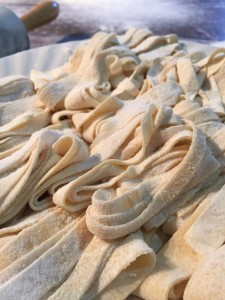
1 cup white wheat bread flour
1 cup semolina flour
4 large eggs
1) Fork-whisk the flours together in a small bowl. Make a well in the center and add the eggs. Fork-whisk the eggs lightly and then mix everything until well combined. Turn the dough out onto a heavily floured surface and knead until the dough is smoothing out, adding flour as needed. Let the dough rest for 20 minutes.
2) Cut the dough into 4 pieces and roll each piece out into a 1/8 inch thick rectangle. Use a pizza wheel to cut the sheet into thin strips and transfer to a floured plate.
3) Shake off excess flour and add to a rapidly boiling large pot of salted and oiled water. Cook for 1-3 minutes, until al dente. Drain the water and toss the pasta with your sauce of choice.
Makes enough for 2 whole lasagnas or 4 plates of pasta