In some ways, I think society places overly high expectations on children. These tiny humans experience big feelings in an overstimulating world. I think all too often we expect children to “sit still and behave” without giving them the skills or even the grace to act like kids.
Many adults find it hard to change the waves of emotions we feel throughout a given day. How can we expect children to have these skills without lessons or even adult role models?
As a mom to three children, I want to do better. I want to teach our children about emotions and how to manage our reactions to them. I want to share my list of the best emotional regulation books for kids with you!
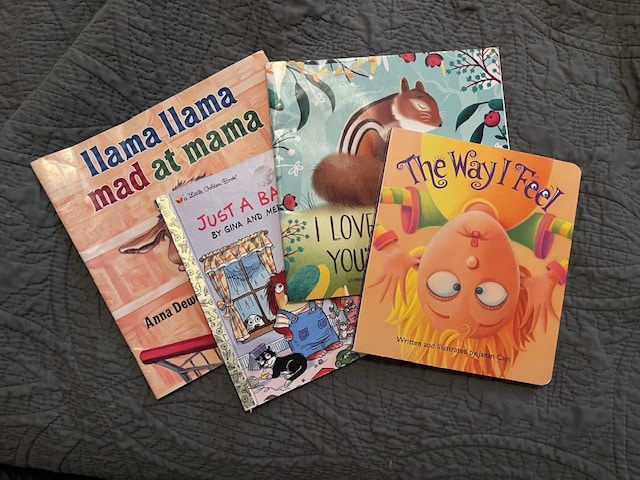
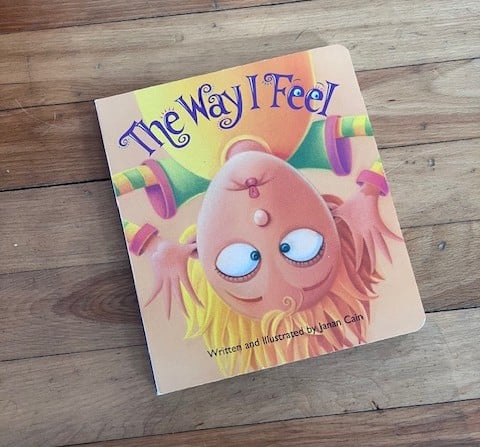
The Way I Feel by Janan Cain
The Way I Feel is the perfect introduction to emotions for your little one. I love the rhyming verses which state and describe each feeling. The book even includes self-guided instructions at the end. We’ve had this book in our bookcase for a long time and enjoy reading it regularly. One thing my child likes is the artwork. While this isn’t exactly an emotional regulation book for kids, identifying and naming emotions is a fundamental skill.
I Love You When I’m Angry by Erin Winters
I love how I Love You When I’m Angry reminds your child that love still exists when we feel angry, sad, AND happy. Both child and parent can have their feelings, and at the end of the day, still come together with love. As a mom, I always want my little one to know this. Even if I frown and get mad, I still love them. Some emotional regulation books for kids aren’t so much about regulating emotions but help to provide a foundation from which healthy emotions can grow.
It’s Great to be Me by Melissa Ahonen
Ahonen’s It’s Great to be Me is all about self-affirmations. As an adult who struggles with confidence, I think it’s important to teach our children to value themselves from a young age. For more affirmations, I love Snoop Dog’s Doggland videos.
B is for Breathe by Dr. Melissa Munro Boyd
Do you want to do more than just identify emotions? B is for Breathe offers the ABCs of coping skills: self-talk, breathing, yoga, and dancing. These are all healthy ways to express your emotions and self-regulate. The book offers a variety of possibilities and ideas. While it’s a children’s book, adults may find some helpful tips for themselves, too!
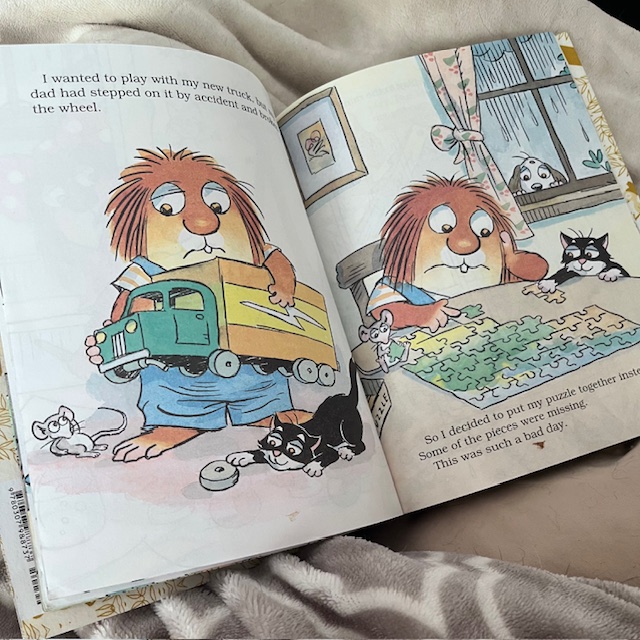
Just a Bad Day by Gina and Mercer Mayer
Sometimes life just doesn’t go as planned, and this beloved story walks the reader through little Critter’s very bad day. I like how it reminds us that we can have bad days, and that’s ok. This classic emotional regulation book for kids really digs into the way bad feelings create a cloud of gloom and color how you see the world around you.
The Rabbit Listened by Cori Doerrfeld
The Rabbit Listened shares that having someone sit and listen while you experience all your emotions is helpful. The book outlines different feelings and reactions to an incident. I find it a helpful introduction to talk therapy. Finding the right person to listen can be a process, and the book offers helpful suggestions for how you can find the right someone to listen to and validate your feelings.
What To Do When You Feel Like Hitting by Cara Goodwin
While the title implies a very specific need – What To Do When You Feel Like Hitting, it’s overall a great example of emotional regulation books for kids. The primary lesson is to focus on redirection from hitting, but many of the skills are transferable.
Llama Llama Mad at Mama by Anna Dewdney
The Llama Llama collection has a variety of stories based on emotion – Llama Llama Mad at Mama, Llama Llama Red Pajama, Llama Llama Misses Mama, Llama Llama I Love You, and even Llama Llama Feelings. If you have a specific emotion you want to showcase, the Llama Llama collection likely has it. Are you also a fan of rhyming books? This sweet collection will meet the need.
The Color Monster by Anna Llenas
The Color Monster is another opportunity to help kids identify emotions without a rhyming story. First, the monster presents as a rainbow of colors (emotions), and later the monster displays each feeling with a color and description.
A Little Scribble Spot by Diane Alber
A Little Scribble Spot is the first of many in a series. I like how the book takes identifying feelings a step further by discussing facial expressions, how each emotion feels in your body, and other clues to read emotions. The series offers a variety of specific emotions and more formal lessons on emotions. This series of emotional regulation books for kids is likely best for a slightly older reader, like 4 year old or older.
Want more ideas, check out Erica’s list too!
Pin this post and be sure to follow Vermont Moms on Pinterest!
Vermont Moms Insiders get exclusive content that you do not want to miss, so sign up today!